


全家福
Proposed US rule barring China science collaboration sparks outcry from US scientists_我的网站

一 | China and Tanzania are set to deepen financial cooperation and expand the use of the Chinese currency renminbi (RMB), or the yuan, in cross-border trade and investment, as the Bank of China on Tuesday hosted an RMB internationalization roadshow in Tanzania. The event, the 10th stop of the Bank of China's 2026 global use of RMB roadshow series, brought together more than 140 representatives from the Chinese Embassy in Tanzania, the Bank of Tanzania, major financial institutions and businesses from both countries to explore new opportunities for RMB cooperation. Speaking at the event, Chinese Ambassador to Tanzania Chen Mingjian said growing economic and trade ties between the two countries had created increasing demand for efficient, convenient and low-cost RMB-based settlement and financing services in Tanzania. "Bilateral trade between China and Tanzania reached 11.28 billion U.S. dollars in 2025, exceeding 10 billion U.S. dollars for the first time," Chen said, adding that trade reached 6.48 billion dollars in the first half of 2026. China has remained Tanzania's largest trading partner and a major source of foreign direct investment for many consecutive years, she said. Yun Yi, deputy general manager of the clearing department at Bank of China Head Office, said the bank would continue to leverage its global network and role as a major provider of cross-border RMB services to support the wider use of the Chinese currency in China-Africa trade and investment. He said the bank would further enhance RMB financial services and facilitate practical cooperation across a wide range of sectors, contributing to higher-quality China-Africa economic and trade cooperation. 
 。
。
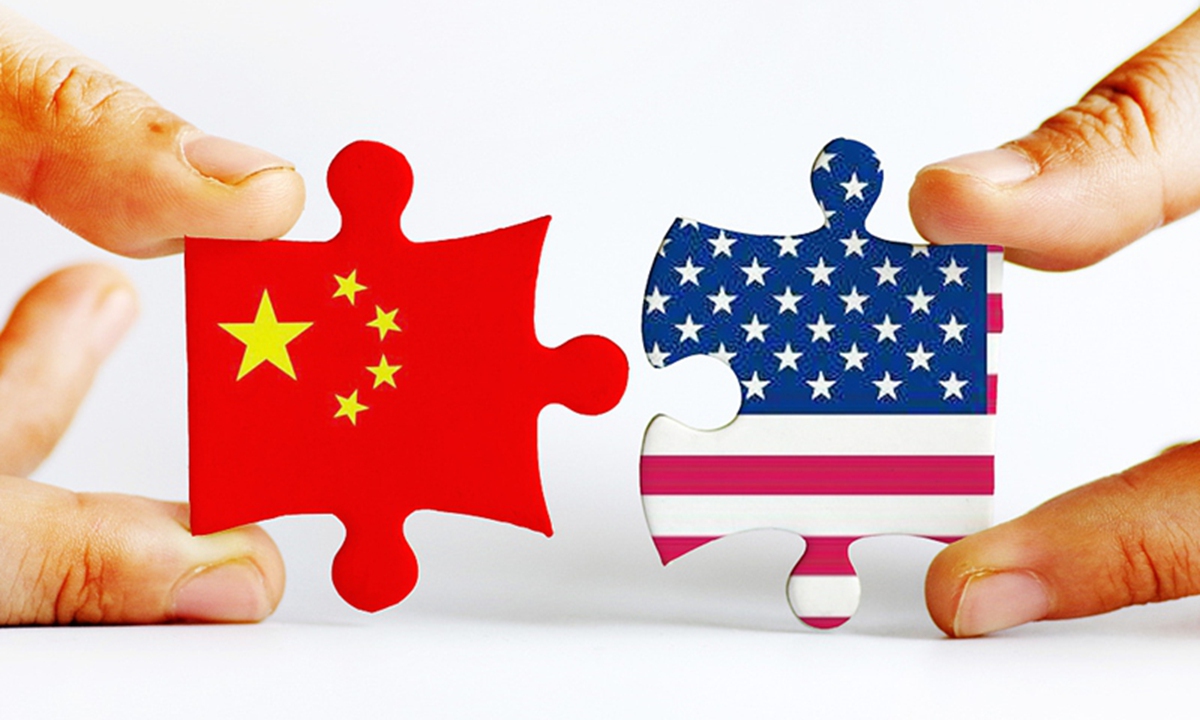
The proposed Office of Management and Budget (OMB) rule, set to take effect in December, would mark one of the biggest overhauls of US science funding in decades, giving political appointees greater authority over grant awards previously guided by scientific peer review and requiring that they "advance the President's policy priorities," according to the Washington Post.
It would also effectively expand the 2011 Wolf Amendment, which bars scientists from using NASA funding for bilateral collaborations with China, to all federal agencies and scientists receiving federal funds, marking the largest break in US-China scientific engagement in decades, the US media outlet reported.
So far, the proposed rule has garnered nearly half a million public comments, many from scientists and leading US science bodies. A Washington Post analysis of 50,000 of those comments found that around 88 percent were negative.
The rule, initially set to take effect in October, was pushed back to December after a bipartisan stopgap funding bill temporarily halted its adoption. Unlike the Wolf Amendment, the rule does not require congressional approval to take effect.
"I do think there are still members of Congress who think we have a monopoly on knowledge. They think we're still in the Cold War Soviet era ... where we were ahead in most areas of science and technology. That is not the case with China. We are no longer the leader in many areas of science," said Tobin Smith, senior vice president for government relations and public policy at the Association for American Universities, which advocates on behalf of leading US research universities, per the Washington Post.
Scientists warn that the rule risks subjecting long-term scientific research to four-year political cycles. "We will not succeed if with every new administration we are ping-ponging back and forth about priorities," the American Association for the Advancement of Science said in a blistering comment, urging the administration to withdraw the rule. "Fast-tracking such profound changes ... hands an easy victory to nations like China," it said, the Washington Post reported.
This reflects a fundamental divide between the US government and the scientific community over how science should develop, Wang Yiwei, a professor at Renmin University of China's School of International Studies, told the Global Times. He noted that politicians tend to believe that suppressing China as a competitor would allow the US to preserve its market dominance and technological edge.
Scientists, however, tend to follow a different logic, as scientific progress depends on openness, exchanges and collaboration. If science and technology are driven solely by competition and private capital, with the ultimate goal of maintaining technological monopolies, this could create greater risks and ultimately undermine US interests as well, Wang said.
The proposed rule change is the latest salvo in a broader battle in Washington over how to respond to China's rise as a scientific superpower. In July, the US National Science Foundation (NSF) also moved to ban collaborations between scientist it funds and many Chinese research institutions and their employees, according to Science magazine.
Liu Shaoshan, director of the Center for Embodied AI at the Shenzhen Institute of Artificial Intelligence and Robotics for Society and a former US-based researcher, told the Global Times in a previous interview that the NSF's new proposed rules created a "talent wall," arguing that restrictions based on nationality, institutional affiliation, and research partnerships could reduce the global talent pool available to the US, weaken its ability to attract leading scientists, and slow scientific innovation.
Liu also said scientific advancement relies not only on discovery but also on the exchange, validation, and dissemination of knowledge.
Wang also said China has built significant strengths through its vast pool of scientists and engineers, complete industrial chains and massive application scenarios, while increasingly moving from application-oriented innovation toward original research. Against this backdrop, US technological blockades and restrictions on cooperation are unlikely to halt China's progress, but could instead isolate American scientists from China's latest research and collaboration opportunities. Such an approach could also prevent the two countries from leveraging their respective strengths and ultimately undermine US competitiveness, Wang said.
。
Current article:http://lwl.ningshunsaotuiqiao.shop/k0n/20260826/83483.html
Published on:07:43:37
 网友从另一个角度解析了张颂文风波,张颂文风波可能会发生转向
 中日英联手抛售美债,特朗普威胁出动美军“救市”,王雨田观察,原创 中日英联手抛售美债,特朗普威胁出动美军“救市”
 欧冠新军沙巴巴库2017年才建队,连闯四轮资格赛晋级正赛
 上半年京津冀实现地区生产总值6.0万亿元 同比增长5.1%
 Filmfare Flashback: Raj Kapoor’s Memorable Win at The 9th Filmfare Awards
 女罪犯“4年生3胎”,仍在家监外执行!法院回应
 首创期货:成本趋弱,苯乙烯期价震荡走低
 马云出手增持,已连日买入阿里港股总额超6亿港元
 广东佛山九江大桥被船舶擦碰,实行临时交通管制
 京津冀生态环境质量改善取得积极成效
 闽宁科技合作推进会在宁夏银川召开,闽宁科技合作推进会在宁夏银川召开
 奋斗者“冀”语 | 乡村里的全天候“120”,40年扎根乡村守护5000多名乡亲们的健康